
OUR VISION
Living for Future aims to practice living as an active activity and to develop new forms of communal living together. Through climate-friendly construction and conscious living habits that adapt to the seasons, we aim to make a sustainable contribution to the future. As a group, we assume socio-political responsibility to achieve more than simply fulfilling individual housing dreams. We reject speculation in housing and, with the 1/10/100 project, want to contribute to creating affordable housing in the city for the long term. The building we are constructing is not for sale and will be taken over by the City of Vienna in 2100, with the association becoming the tenant. We see ourselves as a community based on solidarity, fostering synergies with the surrounding area and shaping everyday life together with our neighbors.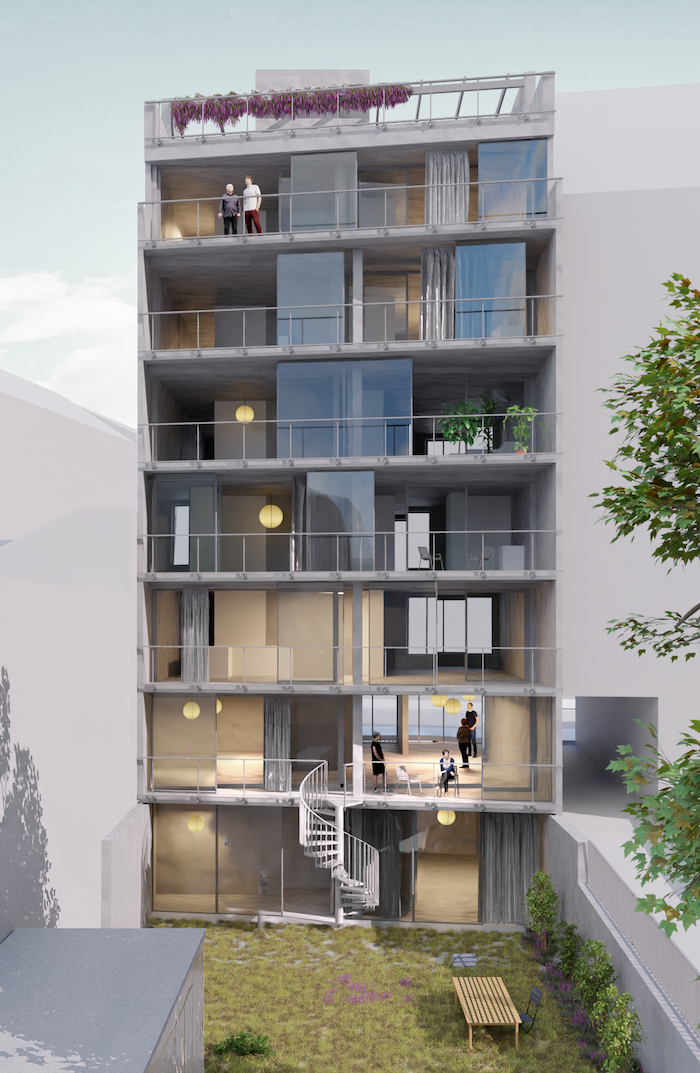
ABOUT THE PROJECT 1/10/100
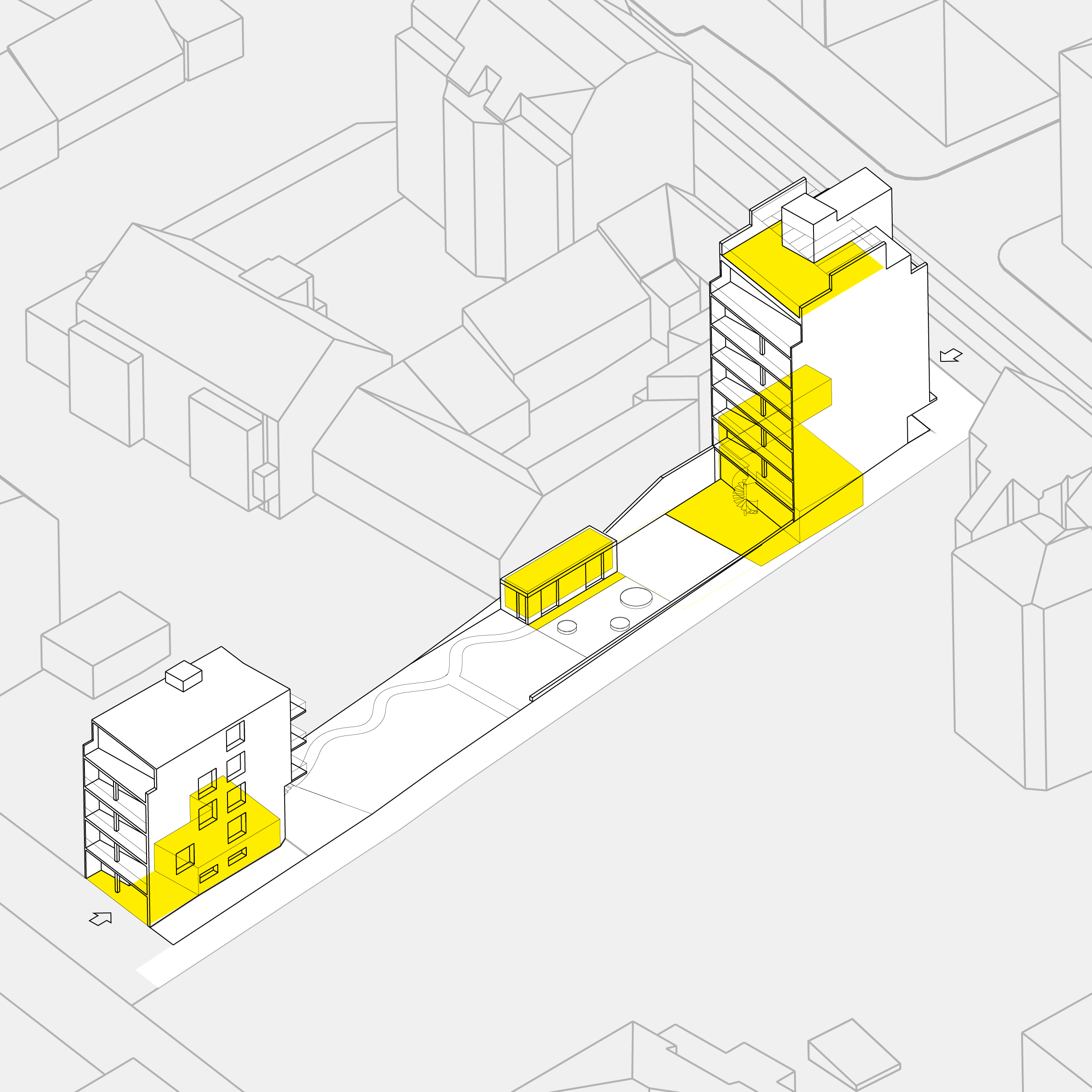
Approximately 11 residential units are being created in two buildings between Hütteldorfer Straße and Felbigergasse, designed to adapt to the changing needs of the residents over time. Unheated winter gardens serve as a climate layer and seasonally extend the living space. The 1/10/100 project is conceived in different time cycles and time horizons, in each of which our guiding principles – climate-friendly living, adapted housing formats, community, and society – are implemented.1-YEAR-CYCLE
Living in harmony with the seasons: As an association for communal and sustainable living, we see an energy- and resource-efficient building as an important opportunity to minimize negative effects on the climate.10-YEAR-CYCLE
Adaptable living units: Depending on the stage of life, the number of people living in a community, and therefore the need for living space, can change significantly.100-YEAR-PERSPECTIVE
The granting of a building lease for the land until 2100 inspires the following considerations: To which long-term climatic changes will we have adapted? And: How will we live there? We see the intensive examination of these questions as a long-term task of the association.
CLIMATE ADAPTED LIVING
We are actively responding to changing climatic conditions with our living arrangements. We are planning a building that allows us to live in harmony with the seasons and use our living space differently throughout the year. Furthermore, we support each other in living a resource-efficient lifestyle (energy supply, mobility, food, waste).Wintergardens:
The building is designed in layers, offering varying amounts of space depending on the season. The unheated conservatory, located on the south-facing facades, acts as a climate layer, providing a framework for adapted living habits. The casement window serves as the conceptual starting point here: by successively opening and closing this climate layer, different climatic conditions are created, adapted to the outside temperatures. This climate layer allows for optimal use of solar energy during the transitional seasons. In summer, the area is open, providing effective shading from below. Greenery on the loggias and roofs provides additional shading and cooling.The garden:
A natural garden will occupy a central area of the property between the two building sections. Through the changing vegetation, the garden reflects the cycle of the seasons and dictates the rhythm of its use. Transitions between indoor and outdoor spaces are designed to be seamless, and the garden will be used as an extension of the living space. Contributing positively to the urban climate: Even in the ten-year future, a lifestyle adapted to natural phenomena is important to us. The garden will have minimal paving, and trees will contribute to a positive impact on the urban climate in the medium term as well.Energy concept:
The building structures exhibit maximum robustness from a building physics perspective: The combination of compactness, effective thermal mass, high-quality thermal insulation, self-shading, and optimized window placement minimizes the remaining building services requirements. The energy concept relies on geothermal energy utilization via a deep borehole and heat pump in combination with thermally activated building components for heating and cooling.Ventilation – Heating – Cooling:
Individual ventilation is achieved via functionally arranged, manually operated windows. During the colder months, the climate control system supports energy-efficient air exchange through slightly pre-tempered supply air. A comfortable indoor climate is ensured by activating the building's ceilings, which can both heat and cool.Ecological heating and cooling supply:
Heat is provided by a heat pump connected to ground source heat exchangers. Summer cooling is offered in a climate-neutral manner. As a side effect, the air heat exchanger used for ground regeneration slightly cools the outside air.Sustainable use of materials:
We want to use sustainable materials and take their different lifespans into account. Rapidly renewable, organic materials will complement the permanently robust structure and will be maintained or renewed every 10 years – also with the participation of the residents.
LIVING IN A HOUSE TOGETHER
The co-housing model allows us to think beyond the individual apartment, to consider the building as a whole, and thus to design apartments that are adaptable in size. The floor plans are designed to allow for extensive adaptation of the living situation to current or future needs.
COMMUNITY AND SOCIETY
We understand living as an active pursuit that extends beyond the building itself, reaching into the wider neighborhood and creating communal synergies. Part of the project involves sharing and providing resources, using space together, supporting social and neighborhood projects (such as exchange centers or repair workshops), and engaging in ongoing reflection on goals and possible courses of action. Through this approach, we aim to build sustainable partnerships with the neighborhood and have a long-term impact on society. Our shared spaces include a common room with a patio, a guest room, a mobility hub with a workshop and laundry facilities, and a rooftop terrace on Hütteldorferstraße.One residential unit will always be designated as a solidarity apartment, available to people with limited financial resources or serving as the long-term support for an external solidarity project. Half of the rent will be covered by the "Living for Future" association. The model is designed to be flexible and will be further developed over the years. Initially, we plan to rent out the apartment in partnership with a sponsoring organization.
Neighbors should have the opportunity to use the community room and community garden. A food co-op and an intergenerational café make an important contribution to connecting with the neighborhood. In addition, we are organizing a public seating area as a consumption-free zone in front of the building, complemented by an open-air bookshelf. For further activities, we would like to rent a vacant space in the immediate vicinity.

ORGANIZATIONAL STRUCTURE AND LEGAL FORM
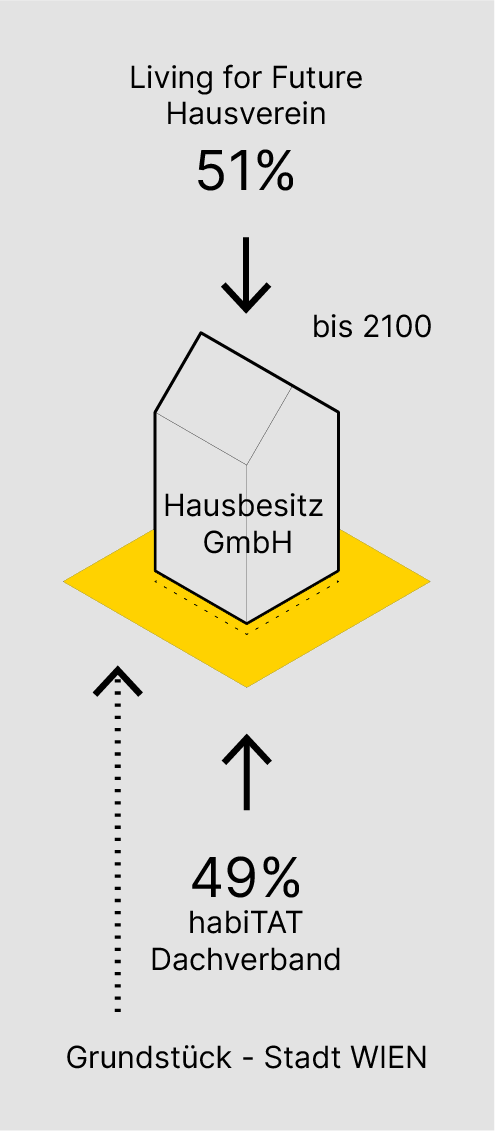
We reject speculation with housing, want to secure affordable housing in the city for future generations, and remove the building from the real estate market for the next 80 years. To this end, we have joined the umbrella organization habiTAT, the Austrian 'Mietshäusersyndikat'.In the habiTAT model, ownership is held by a limited liability company (GmbH) that owns the property. The shareholders of this company are the residents' association Living for Future (51%) and the habiTAT solidarity network (49%). The Living for Future association is comprised of tenants and provides the management and property administration, making self-governing decisions on all aspects of daily life within the community. habiTAT has veto power over the sale of the building and thus acts as a watchdog organization to prevent speculation.
SOLIDARITY NETWORK
Living for Future is part of a solidarity network: habiTAT is an association of housing project initiatives throughout Austria. The structure of habiTAT is designed to foster the creation of as many housing projects as possible, supporting and cooperating with one another. To this end, all residents pay a solidarity contribution with their rent, which is used for the establishment of future limited liability companies (GmbHs). At the same time, habiTAT serves as a solidarity-based knowledge network. New housing projects receive comprehensive advice and support from existing habiTAT projects.
FINANCING
Our financing plan was developed based on the habiTAT model. The capital required to build our houses comprises bank loans, municipal housing loans, subsidies, and private direct loans. The financing is very soundly calculated, and the total debt does not exceed the value of the house. Furthermore, our financing plan was thoroughly reviewed for economic viability by both the City of Vienna, as the building rights holder, and experts from the umbrella organization habiTAT. The calculations take into account maintenance costs, potential rental losses, and the realistic earning potential of the housing project. This earning potential is derived from the rental income, which will form the long-term foundation for loan repayments. The high construction quality, the central location with a garden, and the comparatively affordable rents guarantee that there will always be many people interested in vacant apartments and that no significant rental losses are anticipated.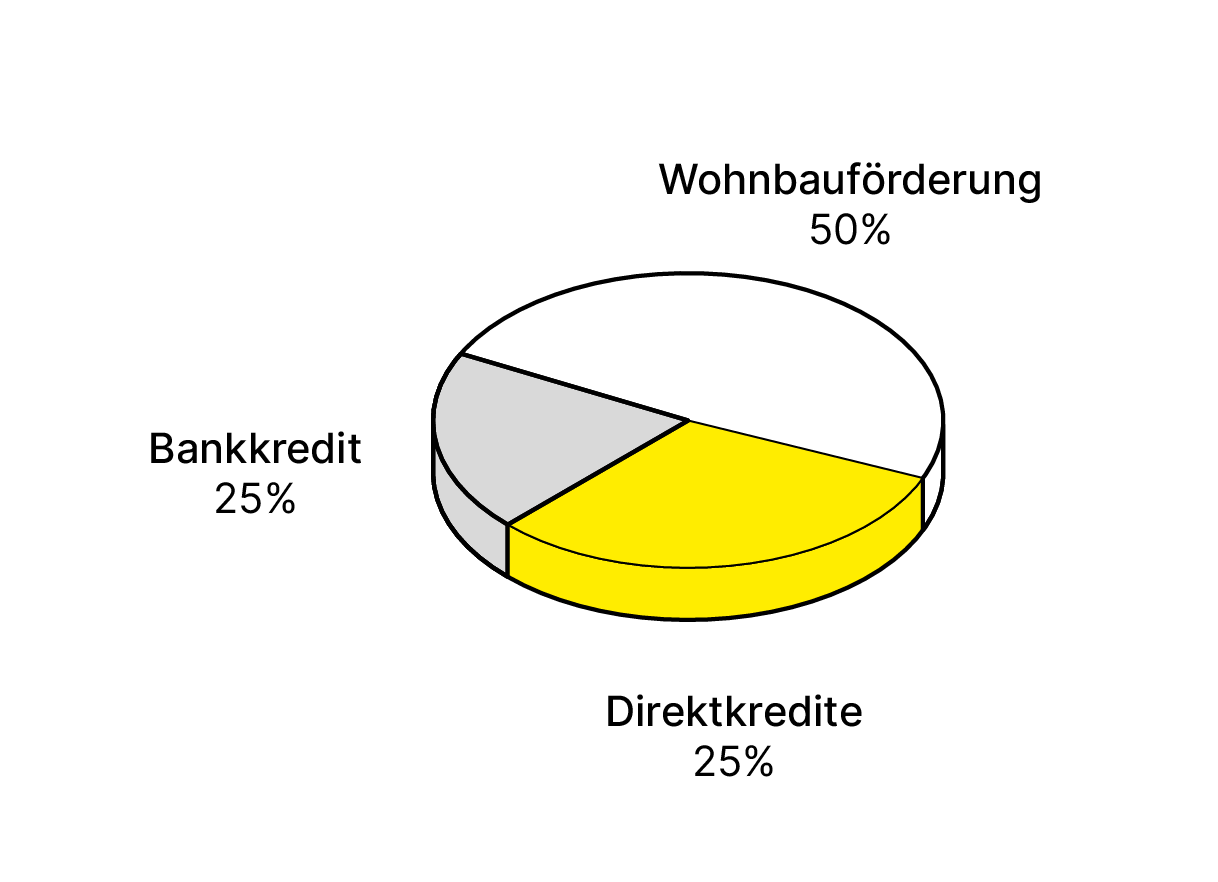
LAND LEASE
The City of Vienna grants the property to the property ownership company (Hausbesitz-GmbH) under a building lease. We can use this land until the year 2100 and pay an annual ground rent to the City of Vienna. The property ownership company constructs the building and is the owner until the building lease expires in 2100. The company assumes responsibility for the construction management and execution, while the association manages the building. The Living for Future association leases the building from the property ownership company and operates it as a residential home. Places in the home are allocated to the association's regular members through user agreements. Until 2100, the ground rent is paid to the City of Vienna. After that, the land and building revert to the City of Vienna, with the association as the tenant.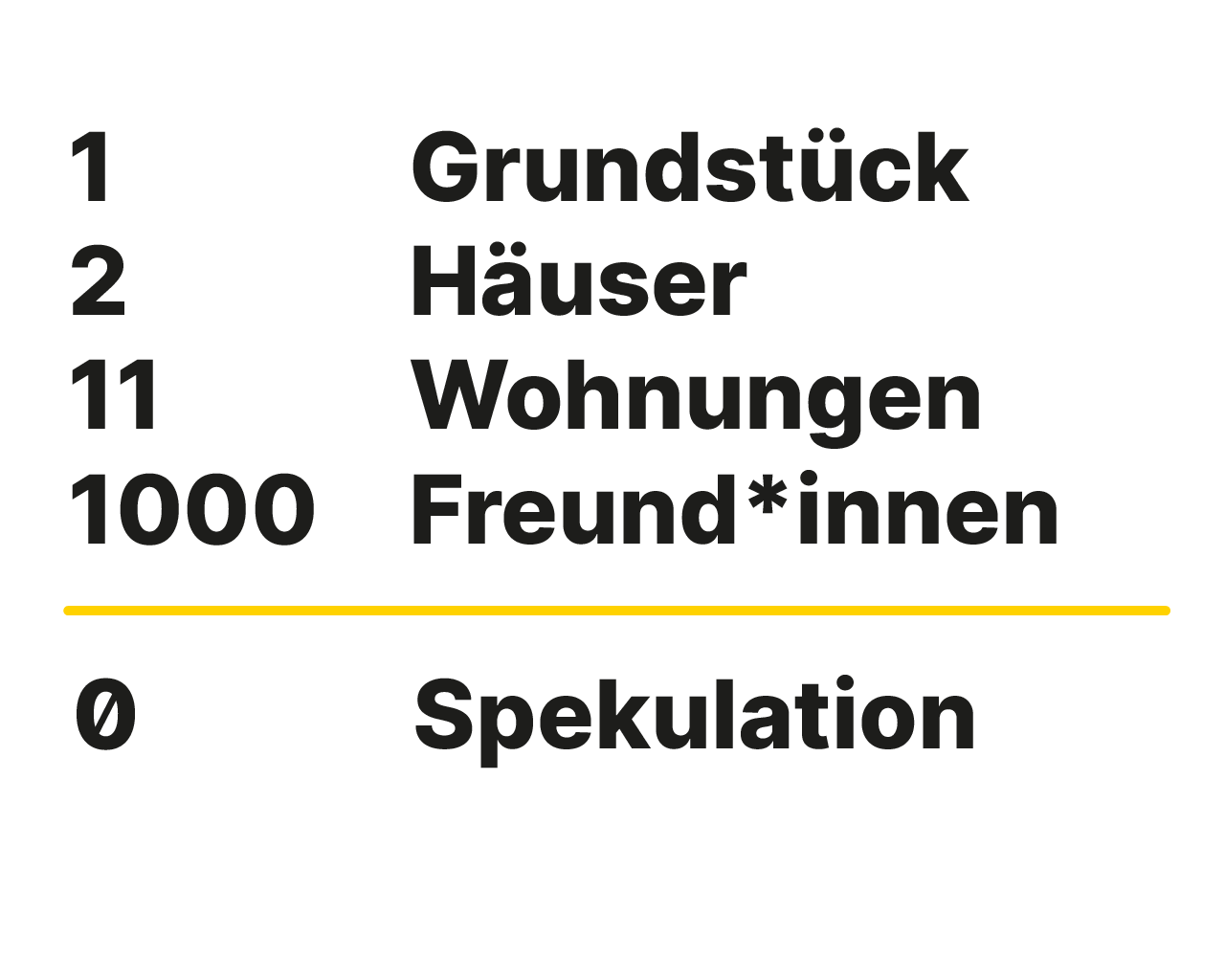
WHO WE ARE
Our group originated from a collaboration of people who primarily work in creative fields (film, architecture, art, urban planning, cultural outreach) and has expanded in various directions over the past year. We make decisions based on sociocratic processes. We are united by enthusiasm, commitment to our principles, and above all, the conviction that we must take matters into our own hands and try things out together in order to bring about change.